4 Mic Technique Tips for Local Singer Songwriters Playing Gigs
Excellent live shows require more than just a great voice; they demand a thorough understanding of how to interact with your audio equipment. Working with an experienced singer-songwriter vocal coach helps you bridge the gap between studio practice and live gig realities.
At Tribeca Music Studio, we know that poor microphone technique can ruin an otherwise brilliant performance. Mastering your spatial relationship with the microphone ensures your audience hears every nuance of your storytelling.
In This Article:
- Tip #1: Adjust Distance for Vocal Dynamics
- Tip #2: Navigate the Proximity Effect for Low Notes
- Tip #3: Align Posture to Support Breath and Projection
- Tip #4: Communicate Effectively With Accompanists
- Frequently Asked Questions
Tip #1: Adjust Distance for Vocal Dynamics
A static position in front of the mic flattens out the emotional dynamics of your song. Professional vocalists treat the microphone as an instrument itself, moving closer for intimacy and pulling back for power.
• Pulling back on high notes: Move the mic an inch or two away when belting to prevent audio clipping and harsh distortion.
• Leaning in for whispers: Bring your lips very close to the grille when singing breathy or quiet passages to capture the subtle textures of your voice.
• Consistent angle maintenance: Always keep the microphone pointed directly at your mouth, even when turning your head to look at the audience.
Tip #2: Navigate the Proximity Effect for Low Notes
Understanding acoustic physics gives you a massive advantage when performing live on stage. The proximity effect is a specific audio phenomenon where low bass frequencies are artificially boosted the closer you get to a directional microphone.
• Boosting weak lows: If your lower register lacks natural volume, singing directly on the grille will instantly add warmth and presence to your tone.
• Avoiding muddy sounds: If you naturally have a very bass-heavy voice, back an inch away from the mic to keep your lyrics crisp and understandable.
• Testing during soundcheck: Always test your physical distance during the soundcheck to hear exactly how the venue speakers react to your specific vocal timbre.
Tip #3: Align Posture to Support Breath and Projection
Holding a microphone or playing a guitar often causes singer-songwriters to hunch over, collapsing their lung capacity. Maintaining structural alignment is crucial for delivering a powerful, sustained vocal performance throughout a long gig.
• Spinal alignment: Stand tall with your feet shoulder-width apart, bringing the microphone up to your face rather than bending your neck down to reach it.
• Guitar placement: Adjust your guitar strap so the instrument does not compress your diaphragm or force your shoulders forward while singing.
• Core engagement: Keep your lower abdomen engaged to support your breath, allowing your voice to project clearly without straining your throat.
Tip #4: Communicate Effectively With Accompanists
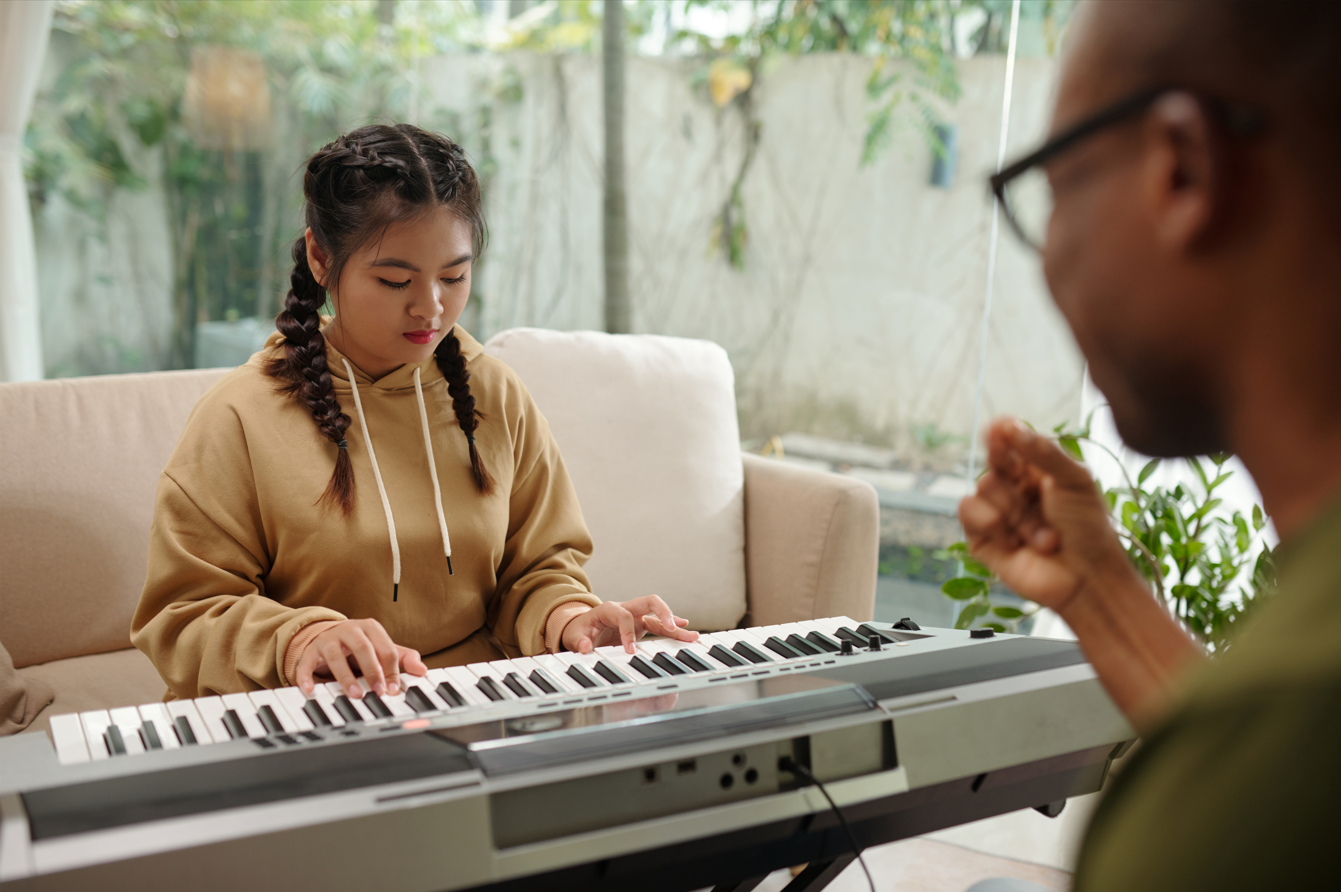
Live gigs require seamless interaction between the vocalist and the backing band. Whether you are leading a jazz trio or playing with a single pianist, nonverbal communication keeps the performance tight.
• Visual cues: Establish clear eye contact with your musicians before launching into a difficult bridge or ending a song.
• Physical gestures: Use subtle movements, like a slight nod or a step back from the mic, to signal instrumental solos.
• Rehearsing transitions: Practice these specific communicative cues during your traditional piano lessons or band rehearsals to ensure they feel entirely natural on stage.
Frequently Asked Questions
How Far Should I Hold The Microphone While Singing?
As a general rule, you should keep the microphone about one to two inches away from your mouth for standard volume singing. If you are belting a powerful note, pull it back to roughly four or five inches to prevent distortion. For intimate, quiet storytelling, you can bring your lips almost entirely to the metal grille to capture maximum detail.
Does Posture Change My Vocal Projection?
Yes, your posture directly dictates your ability to project sound effectively. Hunching over a microphone compresses the lungs and prevents the diaphragm from descending fully, resulting in a weak, breathy tone. Standing tall opens the chest cavity and aligns the vocal tract, allowing sound waves to travel outward with maximum resonance and minimal physical effort.
How Do I Communicate With Live Accompanists?
Effective communication relies entirely on predetermined visual cues and active listening. Before the gig, agree on specific signals for tempo changes, solo sections, and hard stops. During the performance, maintain consistent eye contact and use confident body language to lead the musicians smoothly through the arrangement.
Refine Your Live Performance Skills
Delivering a captivating live show is a skill that requires active coaching and dedicated practice. Local musicians in Tribeca, NY can significantly improve their stage presence by mastering these essential techniques.
Contact us today to fine-tune your live performance and connect more deeply with your audience!